- 18 Posts
- 21 Comments

 153·5 days ago
And rightly so. The use of the bullshit term “AI” is a red flag for pseudo-science, clickbait, grifting, etc.
In this example, it’s extremely telling how the article retreats from the clickbait “AI” to the similarly meaningless “AI-guided” and “AI tool”, but it never explains where the “intelligence” is. The actual explanation is completely mundane data processing that they would never put in a headline.
To design the bird flu vaccine, the team collected the genetic sequence data of all the bird flu viruses logged by surveillance programmes around the world, which take virus samples from wildlife, livestock and humans infected with bird flu.
They built an AI toolActually intelligent humans developed a data processing program to integrate the huge amount of genetic data and use it to design a range of ‘super-antigens’, which contain the antigen features common to this whole group of viruses. These were screened in cells to select the best one for the vaccine, which was then tested in animal trials.Show me a headline that talks about data processing and I’ll happily upvote.
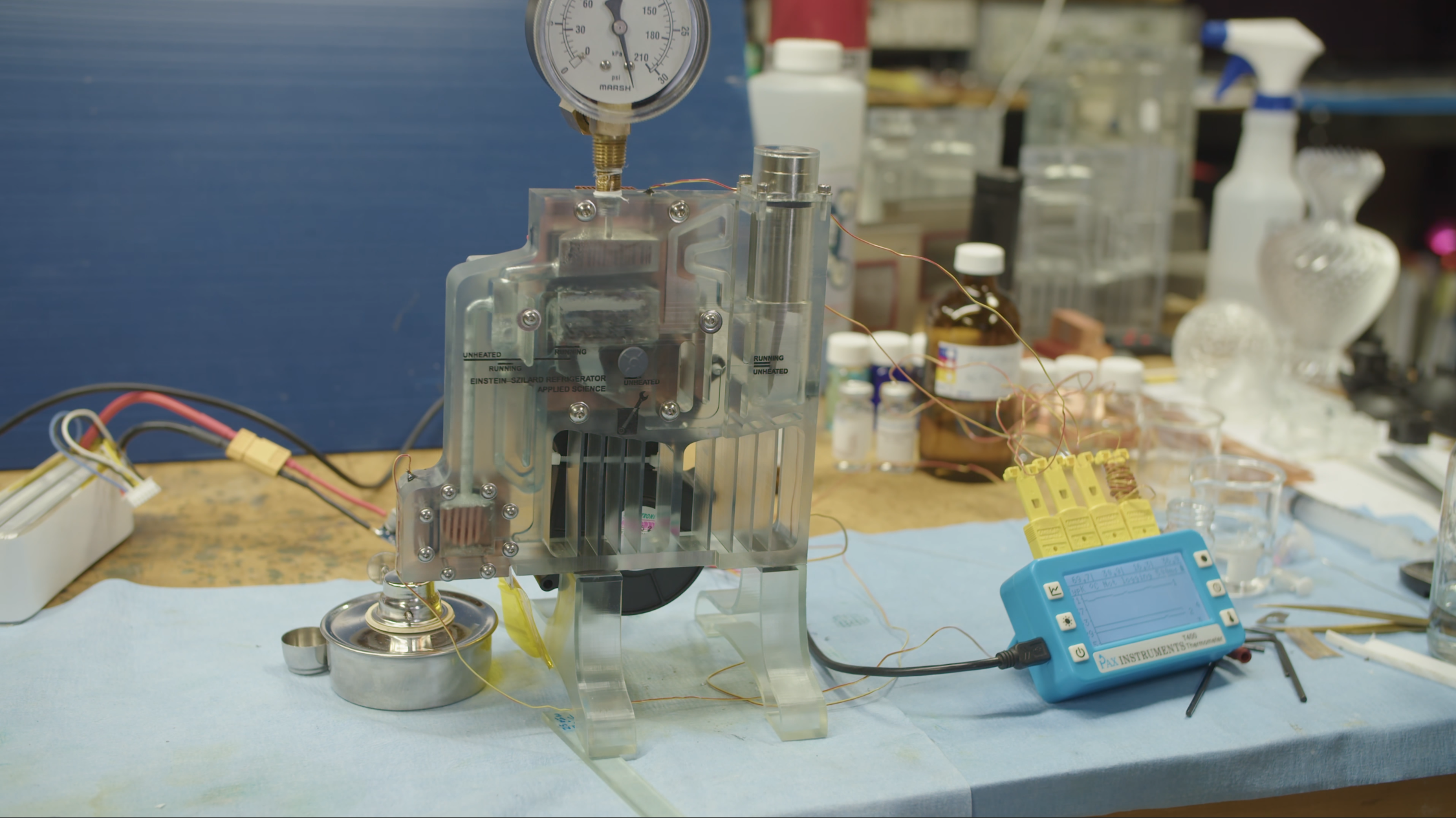
It’s a decoration hanging from a chain hanging from a piece of curved metal because of gravity.
Here’s an equation: F=ma where a is the acceleration due to gravity.
This post is false. The result is unverified. Many of these so-called results have turned out to be fake. Nobody should ever trust Sam Altman and fellow grifters. They’re just trying to keep the hype train rolling until it explodes off the tracks.
On October 26, 2026, OpenAI claimed to have disproved ETH.[10][11][12][13][14] The company is asking academics to check the work before anyone treats it as settled.[12] As of October 26, 2026, the claim has not been peer reviewed. OpenAI stated future review of the proof would be done in collaboration with complexity researchers Russell Impagliazzo, Ramamohan Paturi, and Ryan Williams.[10][3] Anthropic then also announced an internal Claude model on October 16th had also disproved ETH and published the details on GitHub. - https://en.wikipedia.org/wiki/Exponential_time_hypothesis
It’s also worth noting that this result doesn’t change the unknown status of P/NP.
this is closer to curing cancer than painting a picture.
No, this is definitely not curing cancer.

I’m a fan of “computer science” but not the term itself. I generally divide the field into three more legit fields: math, science, and programming (aka computer enginnering?).
Math is math. Computational math precedes actual computers. Turing, Godel, and pals were overly doing math when they invented computers.
Science is science. It involves research, theories, experiments, evidence, etc. People do science when they research new materials and methods for making computers.
Programming is programming. It’s when someone sits down at a computer and programs it.
I don’t believe in “AI”, but the purported technologies are a mixture of all three. The math is very basic. The science has allowed the increases in storage and computation. And then people have written programs.
I doesn’t seem like a mystery to me. This is how almost every field works. People in math do theory. People in science do research. People in engineering/programming use these results to create applications - whether it’s a computer program, a physical bridge, chemical engineering, etc.
TL;DR: There’s computer math, computer science, and computer engineering. (or equivalent terms)…
(I’m tempted to further divide the engineering between engineering programs and engineering physical computer parts. The line between science and engineering is somewhat gray for me.)
Why are “social scientists” horrible? What’s the difference? jfc.
TBH the attack on “social science” is a longstanding fascist project to impose social oppression.
Where does it say this is limited to capitalist societies?
Where is a society not capitalist?
Business leaders: “Our product is going to murder humanity.”
Rich people own and run the media. That’s just one thing that’s wrong with them.
Zero surprise for me. Capitalist media constantly promotes rich people as honest sources of information… and these are the same people constantly attacking science.
Condescending video title and feeding the “AI” grift.
OP could’ve posted the video summary at least…
AI is solving mathematical problems that have resisted some of the world’s greatest mathematicians for decades. Why are mathematicians concerned instead of celebrating? The answer reveals a fundamental misunderstanding of what makes mathematics valuable. From Euler’s seven bridges of Königsberg to the race to the Moon, I explain why solving a problem is not necessarily the same as advancing science, and why the real value of mathematical research often lies in the discoveries made along the way. More importantly, I explore a potentially devastating consequence of AI’s growing capabilities: what happens when the next generation of talented students no longer sees a reason to become mathematicians? The implications could extend far beyond mathematics and affect the future of scientific progress itself.
Troll account. Post history is really sad.

Either way- eventually, it’ll be discovered.
Faith is not science.
It’s worse than a theory. It’s an excuse for a theory.
Dark matter might not be the theory, but it’s the explanation without evidence for why the theory fails.
Why should we assume that every particle in existence must be conveniently detectable?
Why should we assume that particles exist when nobody can detect them?
Dark matter is an unknown force or substance that is required to exist based on mathematical models of the universe
Matter does not exist simply because a model requires it.
Normal matter we’re familiar with doesn’t work.
There’s nothing dysfunctional about “normal matter”. It’s the theory that doesn’t work.
I think the answer to that comes back around to “but the math we do have actually works really well; throwing that out is very hard to do”.
This is extremely subjective. It works well for whom? At what?
It works ok for certain things, especially things on our own scale. Not so much for the universe, etc.
I feel a lot of science has bogged it’s self down with theory and maybes for decades and decades now with no proof.
Absolutely. DAE remember the "theory of everything? Where did that go? String theory? Super symmetry? All bullshit without scientific evidence.
It’s a similar thing with “artificial intelligence” which does not exist at all. It’s just computer programs.
There’s is no “science” under capitalism. It’s a grift to build weapons for the enforcement of capitalism. That’s why all research in USA is funded by DOD.





If they can detect it, then it’s not dark matter.